Decisive Progress in Environmental Management
The path toward carbon neutrality has materialized through concrete actions and major institutional investments. ASISA Group has established its strategy under the SBTi (Science Based Targets Initiative) standard, the most rigorous framework internationally. Among the measures adopted, the transition to 100% renewable energy and self-consumption stands out. Currently, 76% of the total energy consumed by the group, including its own healthcare network led by HLA Grupo Hospitalario, comes from clean sources. In the specific area of electrical energy, this indicator reaches 98% globally and 100% within the insurance company.
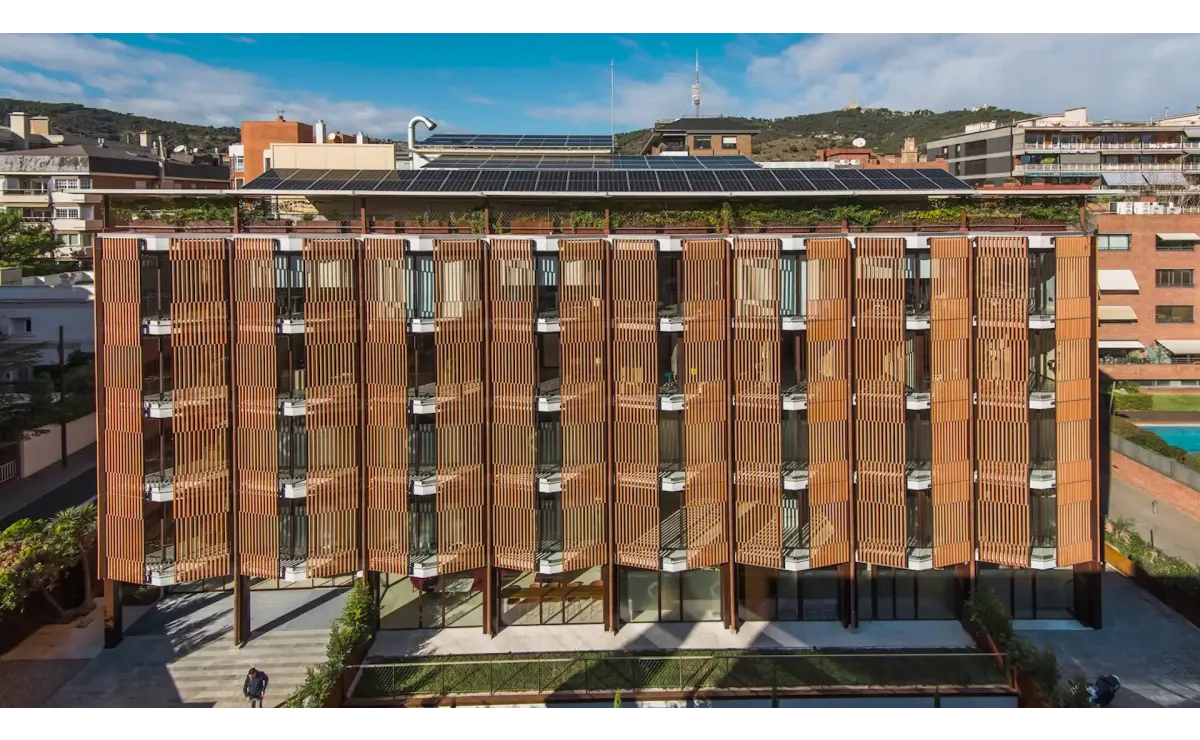
Photovoltaic infrastructure has been key to this process. The more than 700 solar panels installed across 15 healthcare facilities generated over one million kWh in 2025 (equivalent to the annual consumption of 300 homes), avoiding emissions comparable to planting 18,300 trees. Likewise, the operational framework of hospital boilers has been unified to progressively replace fossil fuels with sustainable systems such as aerothermal energy.
Furthermore, the organization has boosted the circular economy by optimizing internal processes for managing logistics waste (pallets, cardboard, and plastics) and repurposing used oil from hospital cafeterias into biodiesel. For emissions that cannot be avoided due to the continuous nature of healthcare assistance, the firm invests in removal and compensation projects in rural areas of Spain, directly improving biodiversity and the local environment.
Boosting the Social Sphere, Equality, and Talent
In the social dimension, the firm's strong commitment to inclusion and gender equity stands out. Women now represent more than 71% of the global workforce, and their presence in senior management positions has continued to grow, surpassing 40%. Labor stability is another fundamental pillar: the number of employees increased by 6.3% over the last year, maintaining nearly 82% of professionals on indefinite contracts.
Internal development was strengthened by providing nearly 90,000 hours of training in 2025, a 6% increase compared to the previous year. These guidelines have raised employee satisfaction by 3 percentage points, allowing the group to appear for the seventh consecutive year in the Forbes magazine ranking as one of the 100 best companies to work for in Spain. Additionally, the group has accelerated its digital transformation to optimize processes and streamline healthcare delivery, indirectly reducing operational emissions.
Robust and Transparent Corporate Governance
During the 2025 financial year, social investment dedicated to sponsorships, donations, and community action grew by 67.7%, reaching 5.3 million euros. This strategy, led by the Fundación ASISA, focuses on vulnerable groups, community health, and medical research, reinforcing the role of insurance as a backbone for social cohesion.
This performance has positioned the insurer among the top ten most reputable companies in its sector in Spain according to the Merco monitor, also outstanding in the Merco ESG report. ASISA Group is an active member of the Spanish Network of the United Nations Global Compact, a partner of Forética—where it leads the "Sustainability in the Health Sector" working group—and is part of RedEWI to promote female leadership.
Finally, the group has adapted its structure to the most advanced regulatory demands by reporting under the Corporate Sustainability Reporting Directive (CSRD). This evolution is complemented by improvements in the quality and traceability of ESG data, ensuring compliance, risk control, and protection against future European external verification processes.