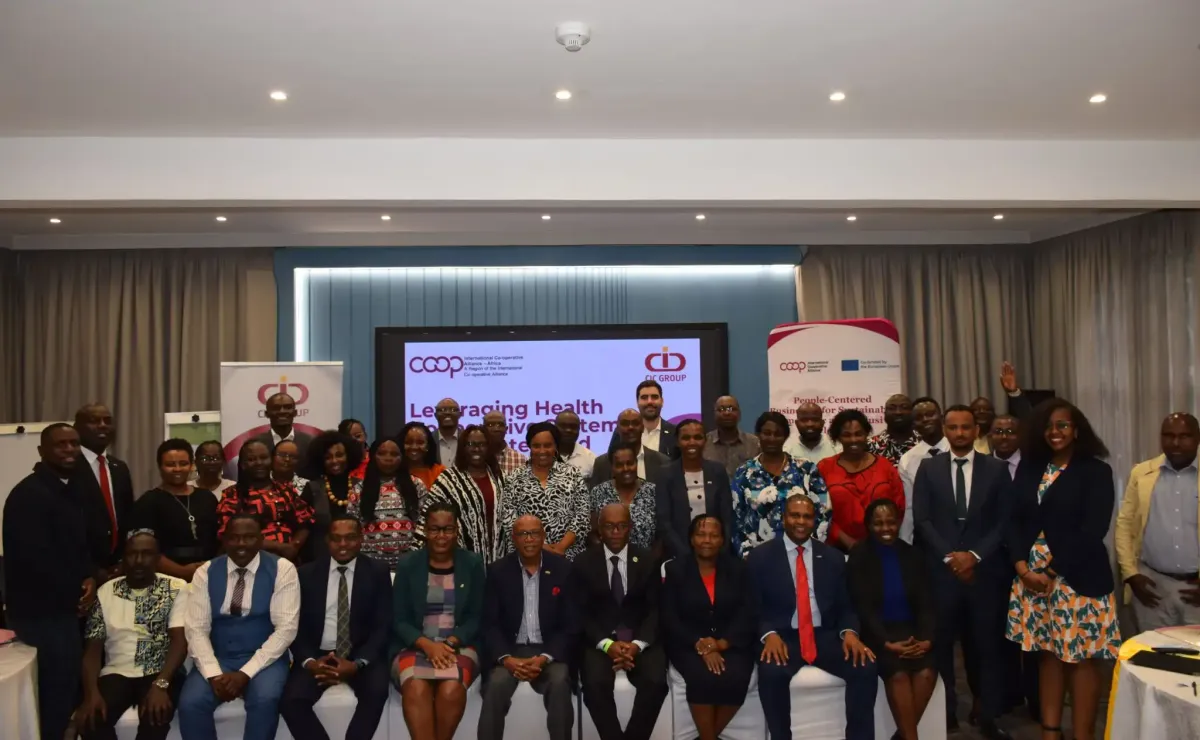
The meeting, organized by the regional office of the International Cooperative Alliance ICA-Africa in collaboration with CIC, a Kenyan-based cooperative insurer, brought together sector leaders and public policy experts with a clear objective: to map out the roadmap toward Universal Health Coverage through the cooperative model. Dr. Carlos Zarco, director of the Espriu Foundation, participated in the event via a video message highlighting the organization's commitment to the international development of cooperative healthcare.
In a continent where millions of people, especially informal economy workers, lack medical protection, the conference underscored how cooperative microinsurance is successfully and drastically reducing direct out-of-pocket expenses.
The catastrophic impact of direct medical expenses
These payments, which citizens make from their own assets due to the lack of public or private health coverage, often have a catastrophic impact on families, forcing them to take on unmanageable debts or sell essential assets for survival, such as land or livestock. This financial instability causes delays in seeking medical attention and treatments, increasing the severity of illnesses and preventable mortality.
Given this reality, cooperatives emerge as a tool with great potential to expand access to health and strengthen the most vulnerable communities.
From theory to practice in the Sustainable Development Goals
A clear vision concerning the future of health in Africa dominated the debates; cooperatives must play an essential role in it. Following the success of the International Year of Cooperatives 2025, the discussions in Nairobi pointed out that Africa must move from theoretical recognition to practical implementation. However, moving toward Sustainable Development Goal 3 (Good Health and Well-being) remains a major challenge due to funding constraints and weak risk-pooling mechanisms.
Experts analyzed various models that are already transforming the current landscape, highlighting cooperative-based microinsurance that offers financial protection to workers with irregular incomes, as well as healthcare professional cooperatives, which allow doctors and nurses to collectively manage services to improve their working conditions.