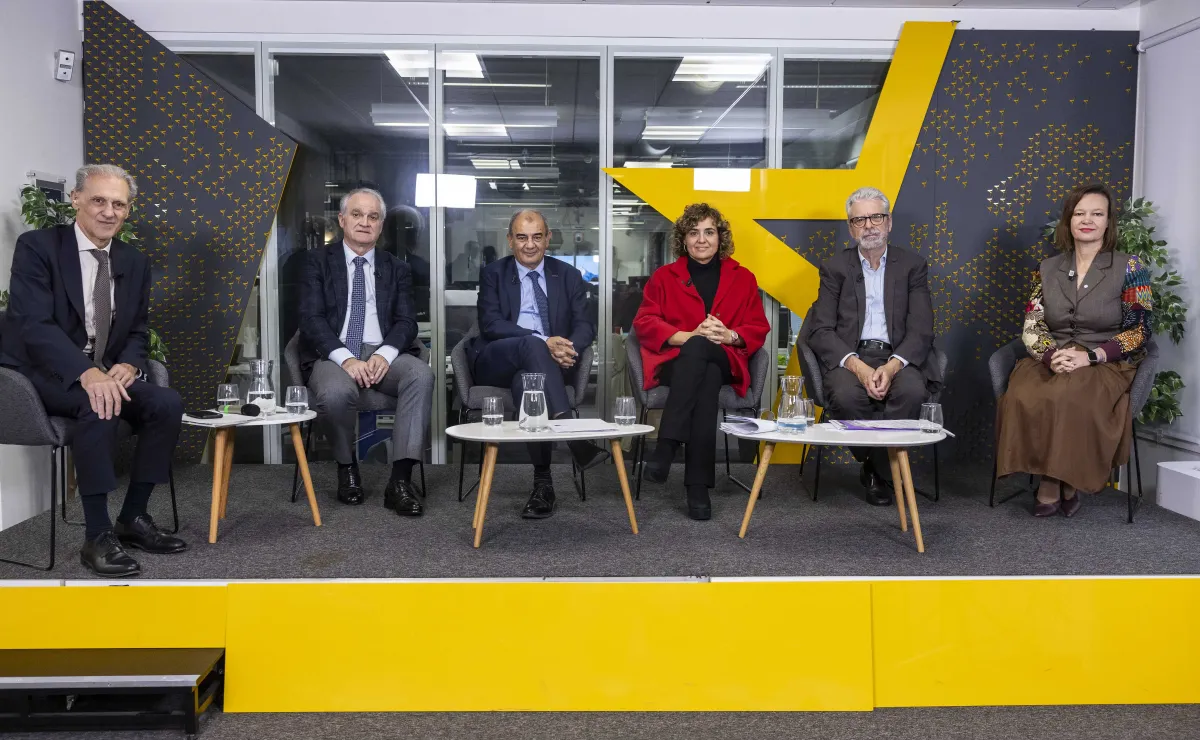
The meeting opened with a message from Roxana Mînzatu, Executive Vice-President of the European Commission, who reaffirmed the European commitment to the Social Economy and announced that new initiatives derived from the revision of the Public Procurement Directives and the State Aid Framework will be presented in early 2026. Mînzatu also highlighted the positive impact of the European Social Fund Plus and InvestEU on the sector's growth and emphasized the specific weight of the cooperative model in Spain.
The debate included the participation of the spokesperson for the European People's Party, Dolors Montserrat; Socialist MEP Leire Pajín; the president of Social Economy Europe, Juan Antonio Pedreño; the president of Bidafarma, Antonio Mingorance; and the president of Cooperatives Europe, Giuseppe Guerini. Iratxe García, president of the Socialists and Democrats Group in the European Parliament, also took part.
8% of European GDP
Throughout the dialogue, the strategic value of the Social Economy was reaffirmed, as it generates 11.5 million jobs across 4.3 million companies and produces 8% of European GDP, while acting as a driver for territorial cohesion and innovation.
In this framework, Dr. Zarco's intervention highlighted the relevance of health cooperatives recalling that, according to the United Nations, they provide access to healthcare services to more than 100 million families worldwide. The director of the Espriu Foundation called for strengthening the presence of the cooperative model in university education and among youth, a key element for its continuity.