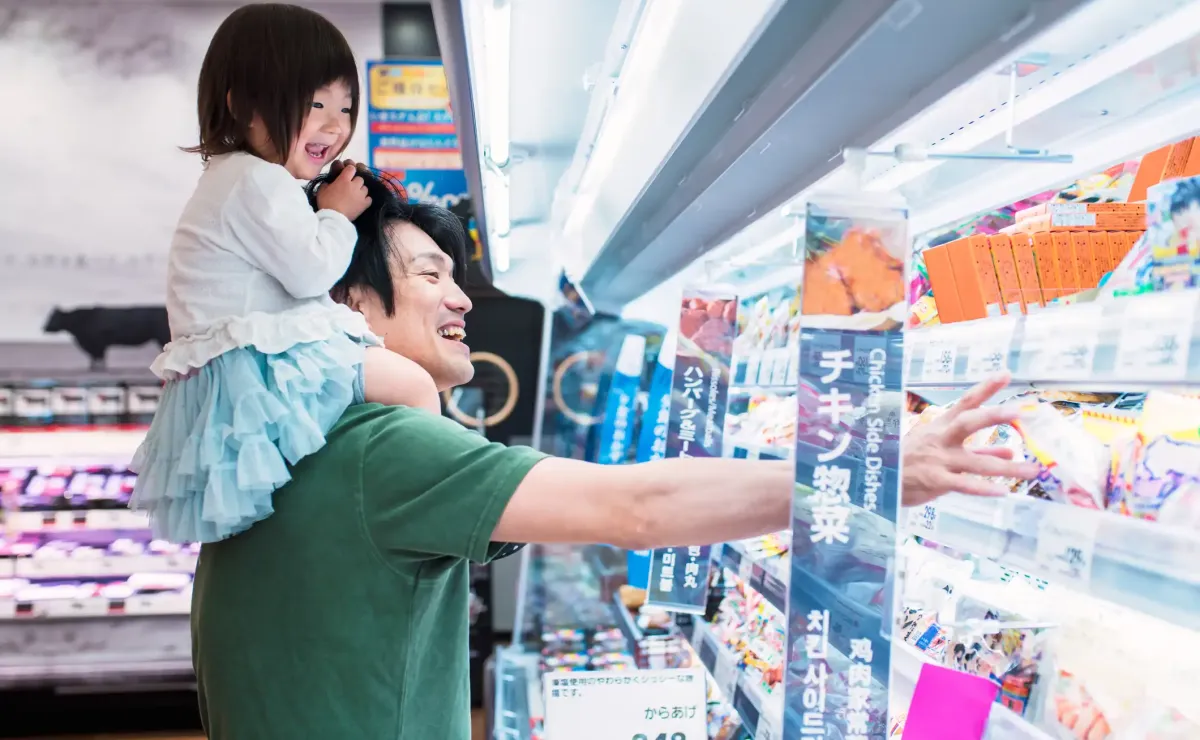
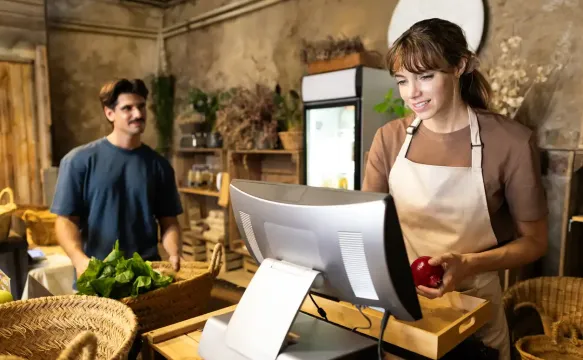
What is today the largest consumer cooperative in the country is not limited to distributing food; it relies on its own high-tech analysis centers, equipped with mass spectrometers and radiation detectors, to offer an additional and exhaustive guarantee for every batch of rice, vegetables, or fish.
This technological deployment does not seek confrontation with institutions, but rather the pursuit of excellence through transparency. When the cooperative's analyses identify levels of pesticides or additives that its members consider improvable, even if these strictly comply with current legality, the product is adjusted, reformed, or replaced. This technical independence has ended up raising the bar for the entire Japanese food industry, motivating large national brands to improve their production processes to align with the expectations of a network of deeply informed and demanding consumers.
The human value of the Han
However, the true strength of this model resides not only in the laboratories, but in its grassroots structure known as the Han. These small groups of neighbors function as the beating heart of the organization. They do not limit themselves to coordinating the logistics of the weekly shop; they act as a direct and two-way communication channel. If a family proposes an improvement in the ergonomics of a container or questions the origin of a specific ingredient, that suggestion scales through the cooperative structure with amazing speed, forcing real changes in the supply chain in a matter of weeks.
Furthermore, in a country facing the challenge of an aging population and high rates of loneliness, the cooperative's delivery drivers have assumed a fundamental social support role. By making periodic deliveries, they perform informal but constant supervision of the well-being of the elderly who live alone. If they detect that an order has not been picked up or that something is not right at the home, notification protocols for relatives or social services are activated, covering critical gaps where public services often do not reach with the same capillarity.
Transparency and active participation
The success of the Japanese model demonstrates that food safety is much more robust when there is an active and organized participation of civil society. By managing their own laboratories and data, citizens have moved from being mere recipients of official information to becoming generators of mutual trust. It is not about aggressive monitoring, but about collaboration based on scientific evidence that benefits the entire community.
Ultimately, Coop Japan has shown that, through neighborhood organization and investment in its own technology, it is possible to build a consumption model where scientific certainty and human well-being are the absolute priority. They have turned the shopping basket into a tool for social cohesion, proving that the best way to predict a safe future is to participate directly in its construction day by day.