Culture
The Rise of Cooperative Bookstores as Engines of Community and Reading Diversity
A participatory management model that complements the traditional publishing ecosystem and strengthens the bond between readers and neighborhoods.
The cooperative movement at the service of social medicine


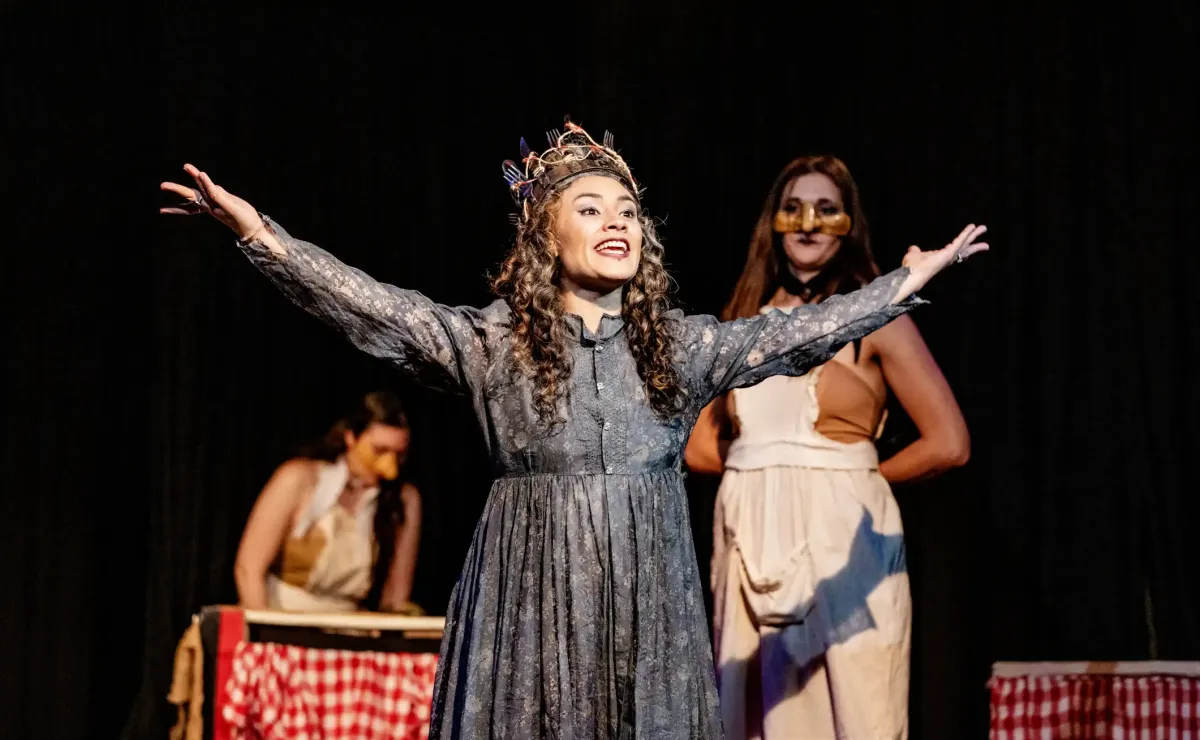
Far from the spotlight, a growing number of performers are exploring cooperative models to gain autonomy, share risks and build sustainable cultural projects without sacrificing creative freedom.
Professional life as an actor is often defined by uncertainty. Auditions, temporary contracts, short-term productions and periods without income are a common reality across the cultural sector. Against this backdrop, some performers and theatre companies are turning to a business model built around participation and shared responsibility: the cooperative.
Beyond a legal structure, cooperativism represents a different way of understanding the profession. Artists cease to be merely contributors to a project and become its managers, owners and strategic decision-makers as well. The aim is not only to create performances or audiovisual productions, but also to build structures capable of providing greater professional stability, strengthening creative independence and distributing risks and rewards more fairly.
The idea is far from new. In fact, some of the most significant precedents in the history of the audiovisual industry emerged from artists’ determination to control their own work.
In 1919, Charlie Chaplin, Mary Pickford, Douglas Fairbanks and D.W. Griffith founded United Artists, a company designed to enable creators to produce and distribute their work without relying entirely on Hollywood’s major studios. The initiative became one of the best-known examples of artists seeking greater autonomy over their careers. [britannica.com], [history.com]
More than a century later, the challenges are different, but the underlying logic remains familiar. In the United Kingdom, the cooperative agency CCM Actors is run by professional actors who actively participate in the organisation’s management and operations. Its model combines artistic representation with democratic member participation. [ccmactors.com]
More recently, Scotland’s Ignis Artists Agency was established as a cooperative organisation representing actors, playwrights and directors, while incorporating direct member involvement in strategic decision-making. [theedinbur...rter.co.uk]
These examples reflect a growing trend: the search for models that give cultural professionals greater control over their future. In an environment characterised by intense competition and increasing concentration within parts of the cultural industry, democratic governance is emerging as a tool to balance power relationships and strengthen long-term projects.
Cooperative structures are also increasingly visible in theatre production and cultural management. In Spain, initiatives such as Culturactiva have become recognised examples of social economy principles applied to culture, developing artistic production, distribution and programming activities through a cooperative framework. [culturactiva.org]
Another example is CRIT Companyia de Teatre, a Valencian cooperative specialising in theatre production, cultural mediation and participation in European projects related to arts and heritage. [teatrecrit.com]
According to CICOPA, the international organisation representing industrial and service cooperatives, collective ownership and worker participation in decision-making can be particularly well suited to sectors that depend on creativity and knowledge. [cicopa.coop]
That said, cultural cooperativism is not without challenges. Several studies examining cooperative theatre experiences in Argentina indicate that these models help sustain artistic projects and foster professional support networks, while also highlighting the economic difficulties faced by many cultural initiatives operating in small markets or with limited funding. [redalyc.org]
For this reason, cooperatives are not presented as a magical solution to the structural problems affecting the performing arts sector. Rather, they offer an organisational alternative that enables professionals to share responsibilities, strengthen their negotiating position and develop their own projects according to the principles of the social economy.
For many performers, the shift requires a redefinition of their role within the industry. It is no longer only about landing the next role, but also about helping shape the conditions that make a long-term career possible. In that journey, an increasing number of actors are discovering that between waiting for opportunities and creating them lies a collective path: self-management.

A participatory management model that complements the traditional publishing ecosystem and strengthens the bond between readers and neighborhoods.

Various initiatives demonstrate that democratic management in the audiovisual sector allows for successful filmmaking and the rescue of local screening rooms.