International Year of Cooperatives
The UN establishes the International Year of Cooperatives every ten years
With this move, cooperativism achieves unparalleled recognition within the international economic context
The cooperative movement at the service of social medicine


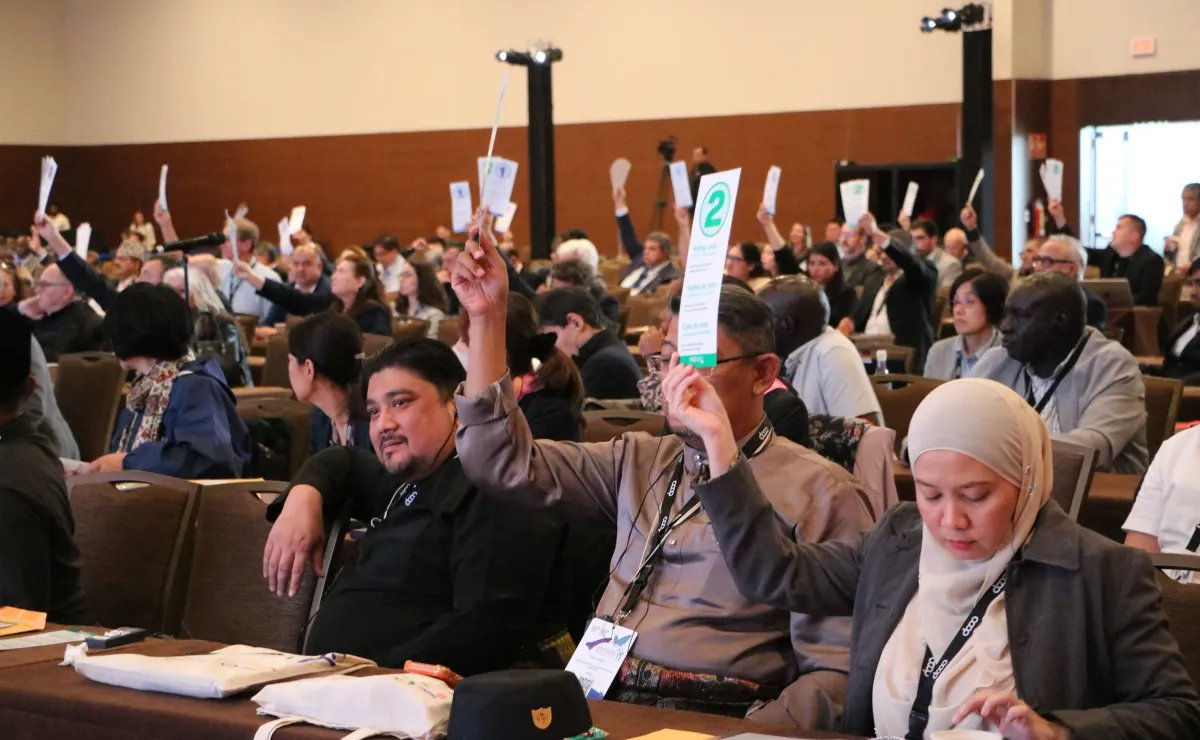
The International Cooperative Alliance and Cooperatives of the Americas host their Global Conference to champion democracy and equity in the face of geopolitical polarization.
In a turbulent geopolitical context marked by proliferating armed conflicts, social unrest, and environmental crises, the search for international stability demands deeply human and inclusive solutions. Countering dynamics that fuel confrontation and hate speech, the global cooperative movement prepares to reaffirm its historical commitment to harmonious coexistence. Under the theme Building bridges: cooperative contributions for a peaceful world, the International Cooperative Alliance (ICA) and Cooperatives of the Americas convene their Global Conference and General Assemblies at the Panama Convention Centre in Panama City.
The gathering brings together leaders, executives, policymakers, and movement partners from across the globe. Supported by prominent ICA member organizations—including the Instituto Panameño Autónomo Cooperativo (IPACOOP) and the Cooperativa de Servicios Múltiples Profesionales—the conference's central theme was endorsed by the international organization's Board with the firm belief that cooperative principles and values offer a unique capacity to eradicate violence and sow lasting prosperity throughout communities.
The Guidance Notes to the ICA Cooperative Principles remind us that cooperatives and their members share a long tradition of active engagement for peace and social justice. The foundational document emphasizes that lasting peace can only be built upon social and economic justice, serving as the essential precondition for the sustainable development of any society locally, nationally, or internationally. In a world deeply interconnected through digital communication media and technologies, open conflict represents the absolute antithesis of cooperation.
This philosophy connects directly with the historic Declaration on positive peace through cooperatives, approved during the ICA General Assembly in Kigali, Rwanda, in 2019. That framework agreement urged the entire movement to deepen its commitment to positive peace through concrete actions reinforcing inclusion, decent work, and equitable development as the sturdiest barriers against extremism and inequality.
As noted by Dr. Ariel Guarco, President of the ICA, respecting the autonomy of each community merges at regional and global levels with a relentless effort to build bridges of understanding. Facing those who choose violence to resolve disputes, the movement's conviction remains unshakable: wherever a cooperative is established, a seed of peace, democracy, inclusion, and equity takes root, needing to be nurtured so it may flourish and multiply across every region of the world.
The choice of venue for this international gathering carries profound ethical and strategic significance. Dr. José Alves de Souza Neto, President of Cooperatives of the Americas, highlights the symbolic value of the Panamanian host city. In this territory, the iconic Bridge of the Americas physically connects North and South America, symbolizing the movement's ability to integrate and build unity within diversity.
Unlike the traditional corporate model centered on maximizing individual profit, cooperative enterprises operate under the principle of "one person, one vote". This democratic governance trains citizens in peaceful dispute resolution and continuous dialogue. Fair participation in decision-making and the equitable distribution of resources eliminate social resentment, a decisive factor in dismantling hate speech before it escalates into violence.
Furthermore, the sustainable management of local resources enables cooperatives to meet basic needs for employment, housing, and food collaboratively. By ensuring democratic access to wealth and protecting the productive fabric during crises, the social economy consolidates a network of community resilience that prevents social tensions arising from scarcity or exclusion.
The summit balances statutory decision-making with ample space for technical discussions and networking. The opening days feature side events and meetings of International Cooperative Alliance governing bodies, followed by the Elective General Assembly. Subsequently, the Global Conference hosts plenary sessions, participatory workshops, the Cooperative Law Congress, and the Coop EXPO, concluding the week with the Regional Elective Assembly of Cooperatives of the Americas.
Additionally, attendees have the opportunity to experience local cooperative projects firsthand and visit strategic landmarks such as the Panama Canal or the capital's historic Casco Viejo. The conference demonstrates that avoiding conflict requires more than neutral rhetoric; it demands genuinely fair economic structures that place people at the center.

With this move, cooperativism achieves unparalleled recognition within the international economic context
The International Cooperative Alliance has taken a decisive step in protecting its identity through the launch of the Cooperative Cultural Heritage project. This ambitious initiative was created with the mission of locating and safeguarding the foundations of a movement that thrives on a shared heritage of traditions and documents that have shaped its global evolution.